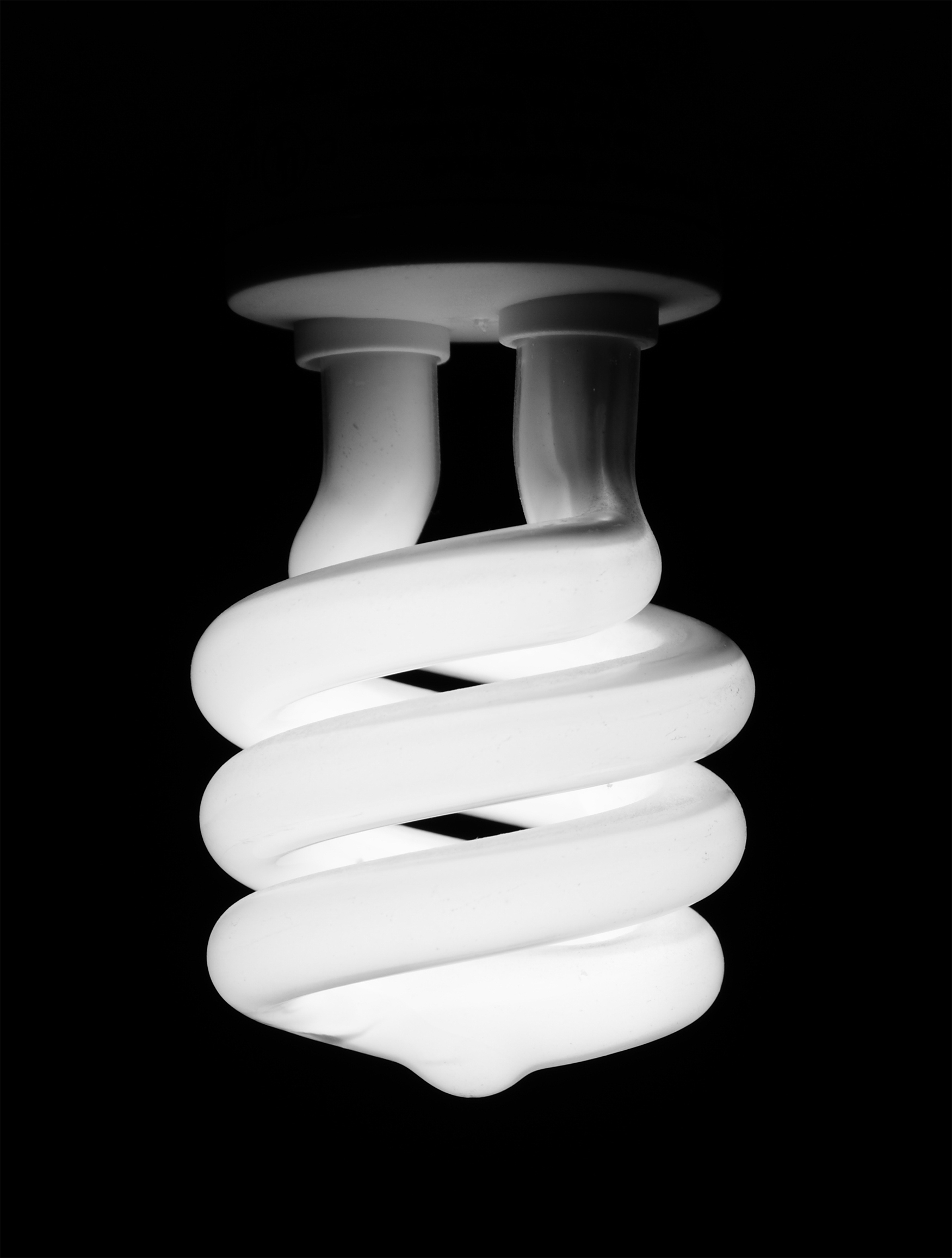
Recycle new light bulbs and avoid mercury risk
By Chantal Cook

Compact fluorescent light bulbs are energy efficient, but could pose public health risks if not disposed of properly.
LANSING, Mich. – Doctors are concerned about environmental and health risks from mercury in compact fluorescent light bulbs.
The Michigan State Medical Society recently warned residents of the dangers of not properly disposing of the bulbs.
The mercury contained in the bulbs can cause public health hazards, society representatives say.
When mercury enters the environment, bacteria can transform it into methyl mercury. Methyl mercury exposure has been linked to birth defects and impaired brain and nervous systems.
Small amounts of mercury are found in all fluorescent bulbs, said Joel Wiese, director of marketing for Michigan Energy Options in East Lansing.
The organization is non-profit and focuses on promoting quality energy efficiency. It has run the Change a Light, Change Michigan program since 2006, which encourages residents to replace old incandescent bulbs with CFLs.
CFLs reduce light costs by 75 percent, Wiese said.
“The biggest risk is with handling or breaking (fluorescent bulbs),” Wiese said.
He said when bulbs break, people should open windows in the area and leave for 15 minutes, according to U.S. Environmental Protection Agency standards.
People should also recycle all bulbs properly and not throw them in the trash, Wiese said.
The Michigan State Medical Society said LED bulbs are a good alternative to CFLs because they contain no mercury and can provide greater energy savings.
But LED bulbs cost more, said Robert McCann, press secretary for the Department of Natural Resources and Environment.
“LED bulbs are more expensive than fluorescent bulbs and not mainstream. The process has to mature a bit more,” McCann said.
He said LED bulbs tend to shine light straight up, which limits the lit area.
For more information on how and where to go to recycle CFLs, go to www.michiganenergyoptions.org.
© 2010, Capital News Service, Michigan State University School of Journalism. Not to be reproduced without permission.

Having read up on the issues around CFLs and mercury, I found this article somewhat disjointed and not really providing accurate information. The MSMS news release regarding CFLs is at http://www.msms.org/AM/Template.cfm?Section=News_Releases&CONTENTID=14394&TEMPLATE=/CM/ContentDisplay.cfm . It doesn’t really indicate that the Society believes mercury from a CFL can cause a public health hazard. Rather, it points to MI’s Dept of Community Health’s advice on the bulbs, here: http://www.michigan.gov/mercury (then click on Mercury Spills and there’s a fact sheet).
People rely on Echo for responsible environmental journalism, so please improve your aim!
Like or Dislike:
0
0
Thanks for the warning, is the LED bulbs will better?
Like or Dislike:
0
0
[...] One of the Michigan Energy Options mashups shows users where to properly dispose of compact fluorescent light bulbs, which contain small amounts of mercury. [...]
Like or Dislike:
0
0
[...] how the lead paragraph does not read, ‘People who hate expensive mercury-laced, low-illumination government-mandated light bulbs have come out surprise [...]
Like or Dislike:
0
0
Leave your response!
Special Reports
Recent Comments
“Really…what is next. A beach is part of the natural...”
Beach managers test for E. coli while another germ goes undetected
“The apathy about climate change is everywhere, not just among...”
Keeping climate change on regional agendas despite public apathy
“It’s too bad that climate change deniers suffer from an SDD. Now...”
VIDEO: Scientists examine the world’s freshwater lakes
“cant you just tell us not show us with a video...”
VIDEO: Documentary series highlights invasive species in national parks – Part 4
“Land application of organic wastes can be a useful way to...”
Pending Michigan bill seeks to curb septic waste seeping into land, water
News archive
Submit a story
Great Lakes Tweets
Interact
Other Resources
Most Commented
Who We Are
Great Lakes Echo is a project of the Knight Center for Environmental Journalism at Michigan State University.
Additional content provided by MSU's Capital News Service.
Technical assistance by MSU's Department of Telecommunications, Information Studies and Media with support from the Michigan Agricultural Experiment Station.