Colorful, fun toys sometimes contain harmful chemicals. Photo: Sheree Zielke (Flickr)

Children’s toys sometimes contain harmful chemicals.

Some Michigan lawmakers are trying to require that manufacturers and distributors let consumers know which toys may be toxic.

Read the full story »
Jan 26 2012 | | 2 Comments
LKS

Scientific research is often poorly understood by citizens and policymakers alike. Two federally funded Great Lakes reserves are bucking that trend by connecting research to the community and its leaders.

Turbine blades next to the tower they'll be placed on. Photo: dave.worth (Flickr)

A recent personal property tax ruling that will cost Michigan counties millions of dollars in revenue could prove vital for utility companies and energy manufacturers around the state.

Jan 24 2012 | | 7 Comments
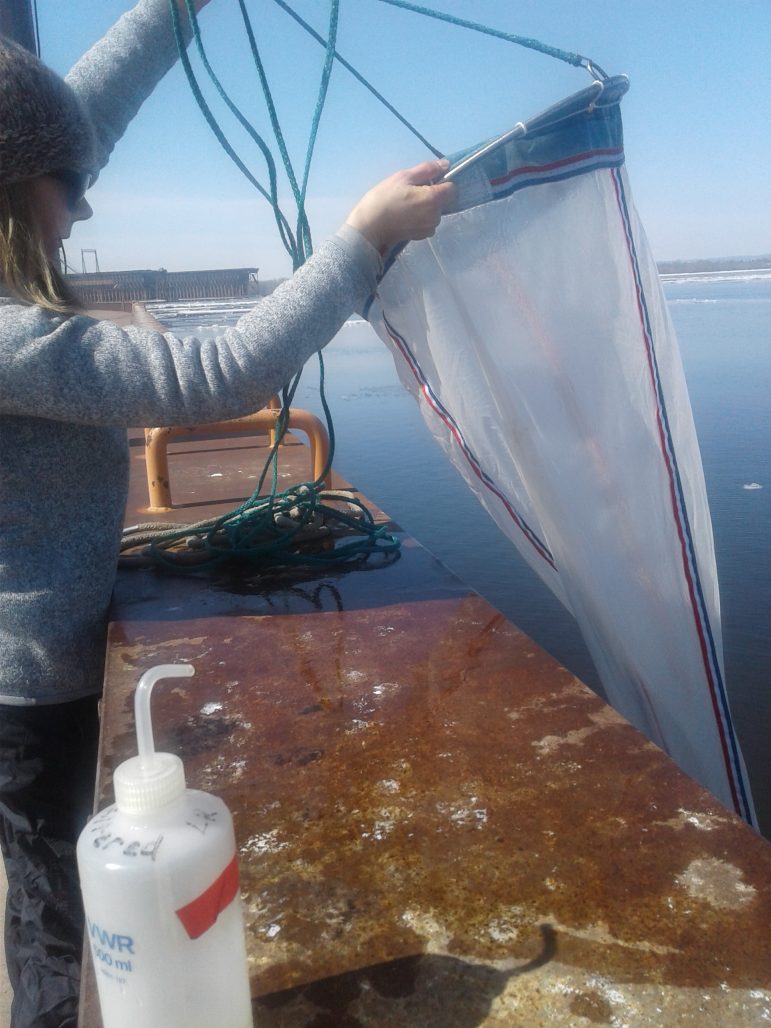
Environment Canada and Canadian Coast Guard personnel recover a sediment trap from an icebreaker on an ice-covered Lake Erie in February 2010. Sediment traps are placed on the bottom of a lake to measure the how much algae sink to the bottom. In this case, algae are thriving in winter below ice. Photo by Michael Twiss, Clarkson University

Ice, cold and the seemingly dormant nature of winter have historically prevented a lot of research on the Great Lakes this time of year. But scientists have discovered a lot of algae hiding out under Lake Erie ice.

Jan 23 2012 | | 5 Comments
City lakes have about four times as much airborne mercury deposited in them than lakes further away. Photo: epc (Flickr)

Little is know about where mercury ends up after it is put into the air.

But new research shows that it is more likely to end up in lakes near cities than those farther away.

Jan 20 2012 | | 13 Comments
chicagoview

Apple co-founder, Steve Wozniak, was a creative genius that put results ahead of the process.

As collaborations and coalitions proliferate in the Great Lakes region, we need a Wozniak to break us from the chains of groupthink that are stalling environmental progress.

Jan 19 2012 | | 4 Comments
juliecliff

Julie Jilek loves Wisconsin. She loves it so much in fact, that she’s going to every state park to paint a scene. We caught up with Julie to talk about her art and what prompted the project.

Jan 18 2012 | | One Comment
The feds list toxaphene as a contaminant that can cause fish consumption advisories, but not all Great Lakes states test for it. Photo: EPA

Toxaphene is a highly toxic pesticide that has lingered in the Great Lakes since its banning decades ago.

However, the mix of chemicals break down slowly, but appear to be diminishing rapidly in the Great Lakes.

Researchers on Pine Creek, a Manistee River tributary, found brook trout gorging on salmon eggs had high levels of PCBs, especially compared with trout in a nearby stream closed off to salmon. Photo: David Janetski

Removing dams has long been considered a good way to restore the natural flow and ecological balance of a river. But developing research shows that dam removal may allow contaminated fish to spread their toxicity further inland.

Jan 16 2012 | | 13 Comments
Fire blight leaves leaves and trees looking scorched. Photo: Michigan State University

Fire blight scorches apple and pear trees in the Great Lakes region in the spring. The bacteria that causes the disease has grown resistant to treatment, so Michigan officials are seeking a federal exemption for a non-registered pesticide.

Jan 13 2012 | | 5 Comments
Martha

A journey to visit Martha, the last of her species – passenger pigeons.

Martha and other endlings reside in museums from Washington D.C. to Nukus, serving as humbling reminders of human impacts on biodiversity.